CAMEO Chemicals
Help content and app store branding for a mobile app called CAMEO Chemicals, which provides firefighters and first responders with key information on hazardous chemicals
Overview
CAMEO Chemicals is a mobile app designed to support firefighters and first responders in chemical emergencies. The program was built by the National Oceanic and Atmospheric Administration (NOAA) and the Environmental Protection Agency (EPA). As a Technical Writer and UX Designer at NOAA, I compiled the content for the Help pages within the app, consulted on UI elements, and crafted outreach and promotion strategy.
Research
Before CAMEO Chemicals was a mobile app, it was accessible as a website, mobile website, and desktop program, used by over 1.5 million people yearly. The decision to make an app was based on requests from users (primarily firefighters), who wanted a way to access information from their phones or iPads on their way to an emergency.
We knew from interviews and discussions with users that they needed access to chemical information even when they were disconnected from wifi. This would become a key feature of the app. We also had data on the most common search terms entered by users, which we could use to anticipate what users might struggle with in the app (such as dealing with misspellings, unsuccessful searches, or alternative names).
Planning
Incomplete or confusing documentation has been cited as one of the largest frustrations users have with free software. With so much at risk in chemical emergencies, I knew we couldn't afford to have anything but perfectly clear documentation. My goal was to explain every feature of the app in concise terms, make key words searchable, and provide clear visuals so that users could translate our content into action.
I also assisted with the outreach and promotion elements of the app. This involved crafting blog posts, social media content, and outreach to emergency response newsletters. Additionally, I created the visual content for the App Store and Google Play Store. My goal for these visuals was to distill the essence of our app into several images that conveyed the core features of our program.
Design
Much of the text for the app Help pages was inherited from the website version of the program. However, because of the smaller screen size, we needed to vastly reduce the amount of content included in the mobile version of the program. We also needed to create an entirely new set of graphics for the mobile version, which would be reflective of the user's new mobile experience.
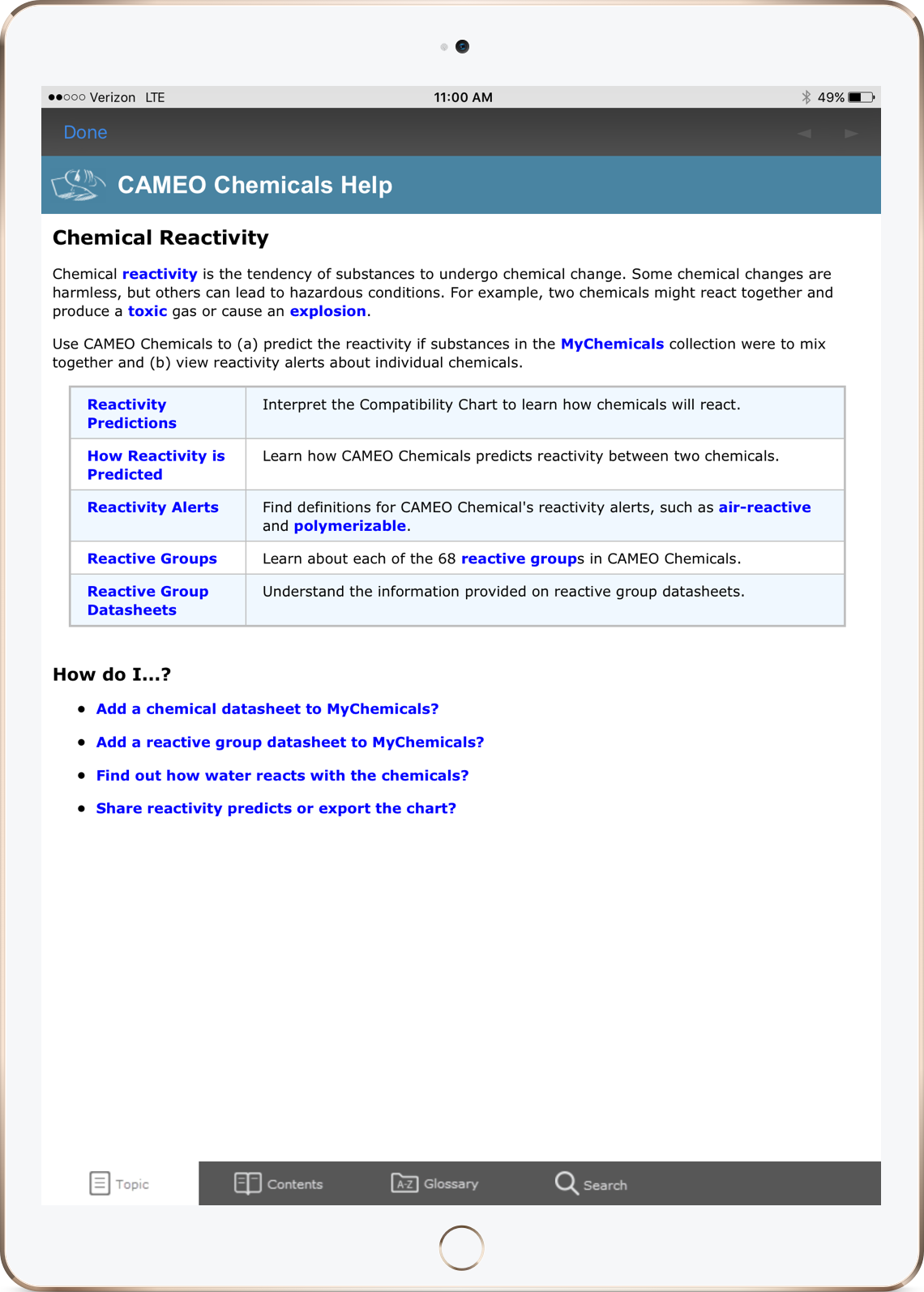
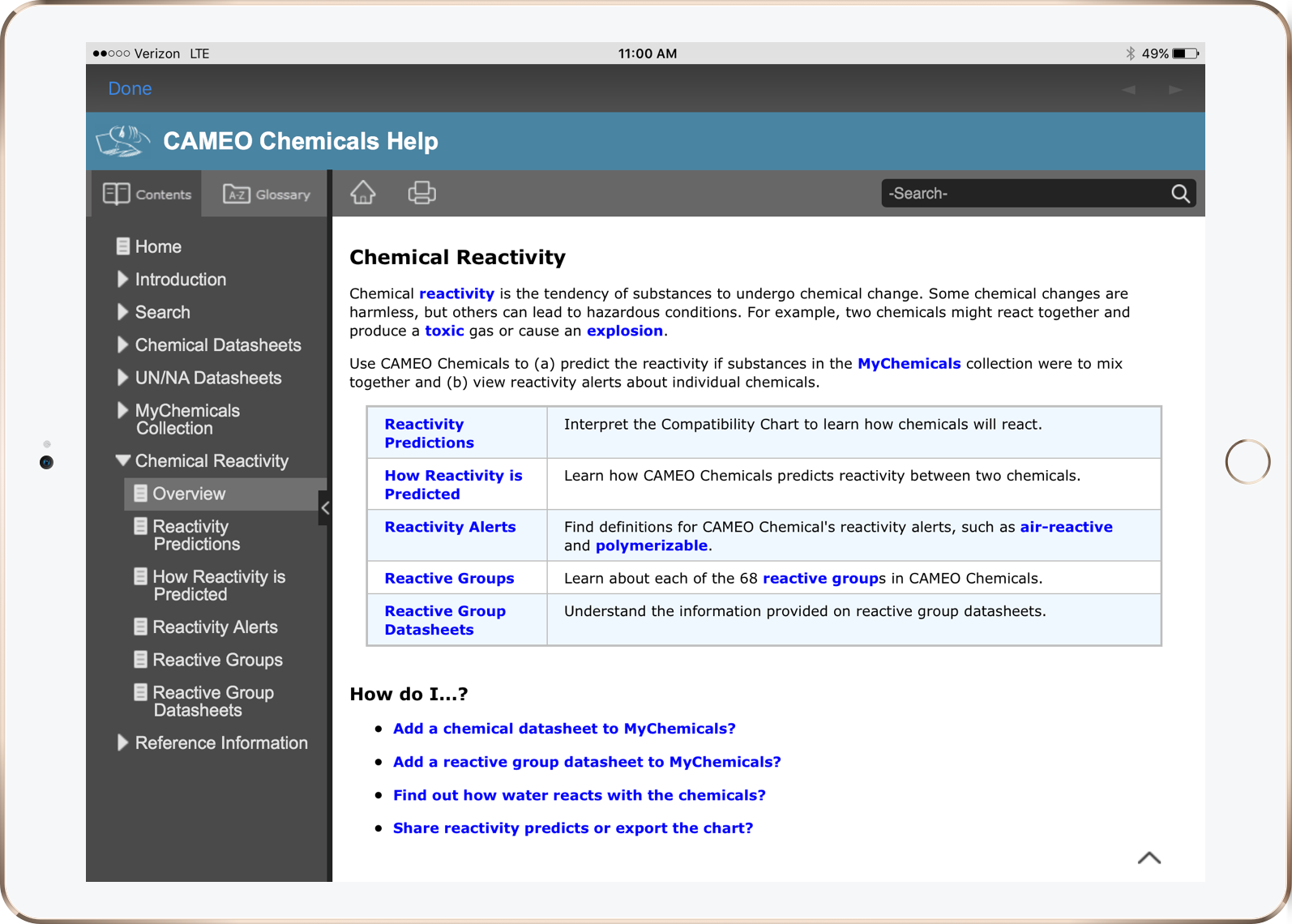
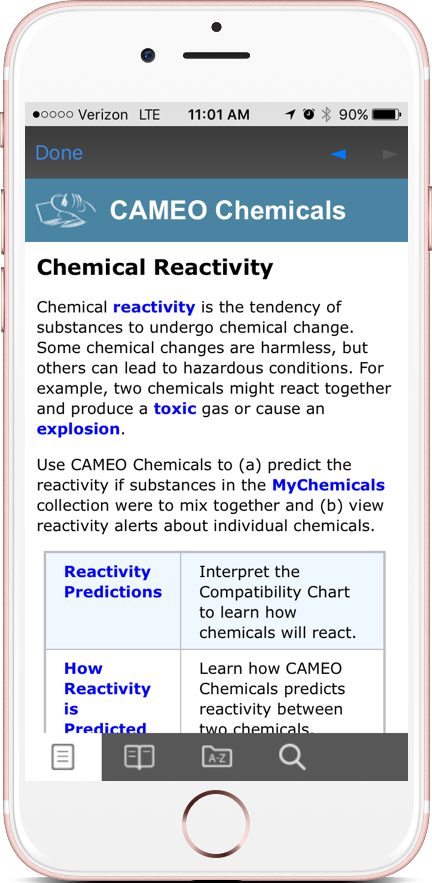
To compile the Helps, we used RoboHelp, an Adobe program for authoring help content. This allowed our Helps to be responsive and work with any device screen size. Below are images of the help text in portrait and landscape layout on an iPad and in portrait layout on an iPhone.
For the visual elements in the app stores, I knew that we would need clear images that explained the purpose and features of the app. After comparing dozens of visual concepts, I decided to use a solid blue background—which would serve as a strong contrast against our white screen—with a slight gradient for visual interest. I added a blue wavy line behind the images to create a flow between all five of the screenshots, which encouraged viewers to follow the line to the right, swiping to view the next screenshots. The line also added an organic element to the graphics.
Results and Learning
The app was published in the App Store and Google Play in April 2017. As of March 1, 2018, the app has been downloaded over 30,000 times. It is the most-downloaded app produced by NOAA.
For me, this project was exciting for several reasons:
I was excited to learn a new program (RoboHelp).
The world of chemical response was entirely new to me. I was lucky to work with many experienced chemists, biologists, programmers, and more who introduced me to the complex world of chemical response.
I consistently challenged myself to make my writing more clear and concise.
I was able to observe firsthand the process of building, launching, and promoting an app. Knowing what is involved and the approximate time our team needs to reach key milestones is a huge datapoint for us as we look forward to this fall, when we will launch our second app.
Since the app's release, I have been able to dive deep into the analytics to uncover trends regarding the geographic distribution of our users, how frequently the app is used, and more.
Read more about the app and our process in this blog post, or download the app and test it out yourself!